

Lilac | Grass Fed Tallow Soap Bar
Each bar is crafted to last. Most customers enjoy 8–12 weeks of daily use per bar.
Choose your Cut Style
Quantity:
Order by 12pm EST for Same-Day Shipping!
30-Day Risk-Free Trial
🌿 100% Plastic-Free Products
Standing Orders. Choose your frequency, earn your preferred rate — up to 12%. Complimentary shipping on orders $75+.
Couldn't load pickup availability
Product Benefits
Description
Some soaps we make to sell. This one we made because someone we love was homesick for a smell.
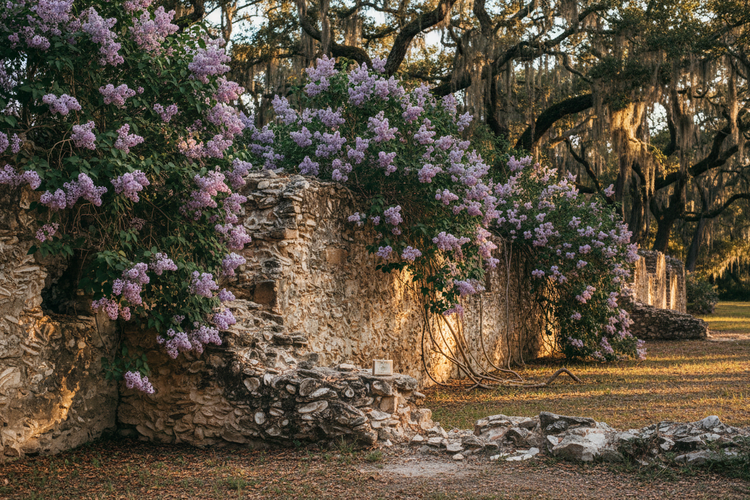
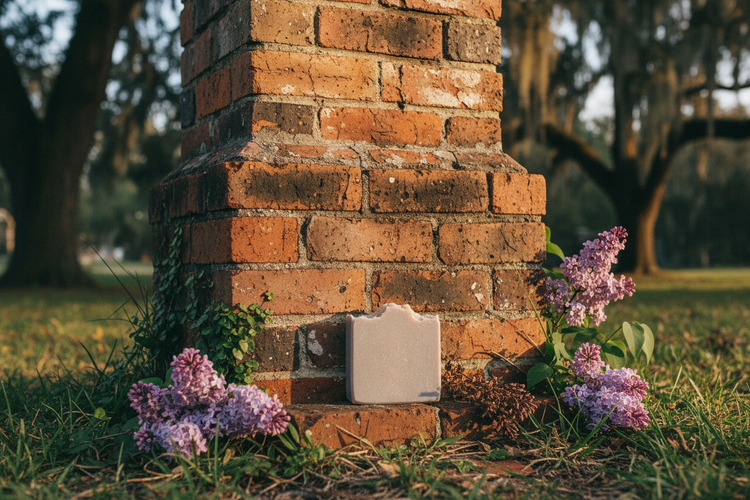
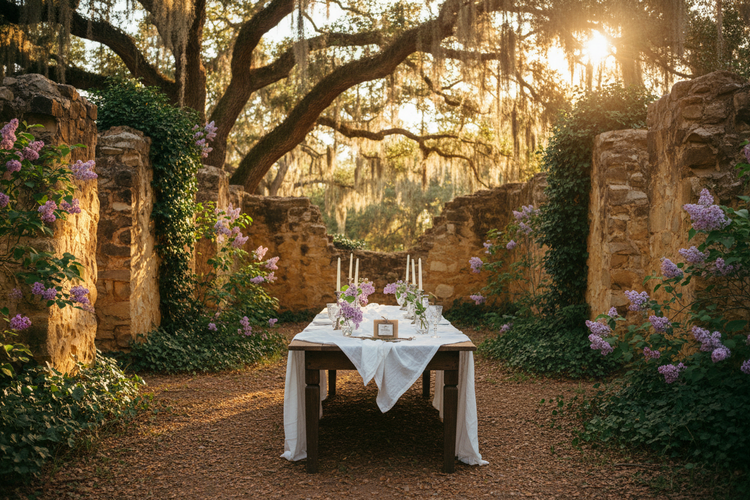
A dear friend, far from home now, missed the lilacs of her girlhood — that particular powdery sweetness that outlives the porch it grew beside, the garden that's long gone to seed. Here in the Lowcountry we know that kind of survival. Walk the old plantation grounds at Botany Bay and you'll find stone walls standing with no house left to hold up, chimneys alone in a field, and still — something blooms there every spring, planted by hands two hundred years gone. Lilac is that flower. It doesn't ask permission to keep going.
So we went looking for the true scent of it — through a recipe that traces back to a small farm in France, and down every dead end most makers take, before we found the honest way to build it. When she finally smelled the finished bar, she said the only words we were waiting for: that's them.
What's in it
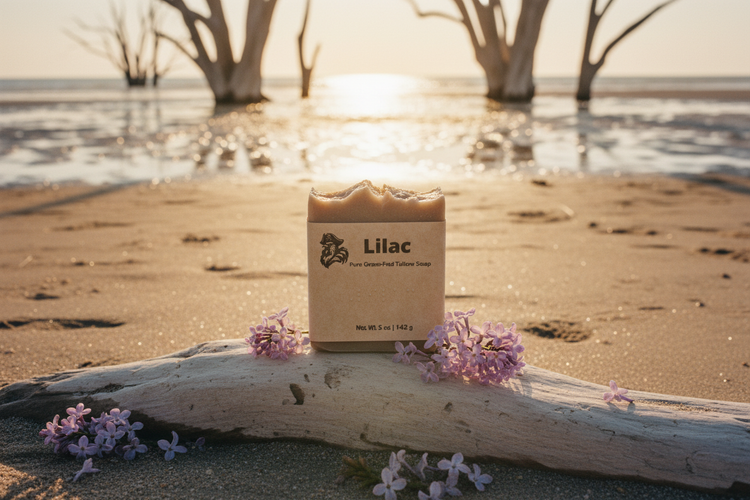
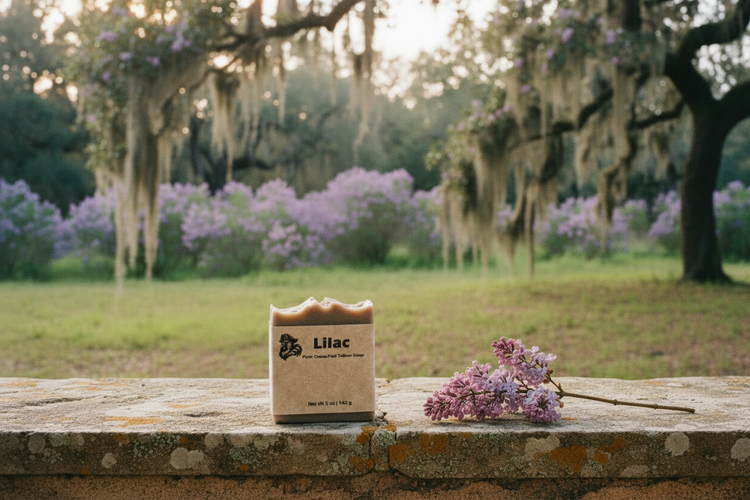
The scent. Lilac is one of the flowers that won't be captured — the blossom yields no oil, so a true lilac has to be built by hand, note by note. What sets ours apart is what sits at its heart. Most makers fake the powder with a synthetic; we reached instead for genuine violet, Viola odorata — one of the rarest and costliest oils there is, the cool, powdery, faintly old-fashioned note nearly every lilac scent misses. It distills, but barely, and almost no one uses the real thing because it simply isn't economical. We did. Over it, a lift of bergamot brightens the whole accord until it reads, unmistakably, as lilac in full bloom — the kind that grows wild against old stone with no one left to tend it. Rose and jasmine deepen the floral heart, ylang ylang rounds it, and vanilla settles underneath, warm and soft, the way an evening garden holds its scent long after the house beside it has fallen quiet. No synthetic fragrance, ever.
Indigo and purple clay. The color of the flower just before it opens. Indigo powder and purple clay are layered to give this bar its pale lilac-blue — no dye, nothing synthetic. What you see is what the earth gave us.
Why our tallow is different
Not all tallow is equal. Certified grass-fed means the animal spent at least 95% of its life on open pasture — sun, grass, and open land the way nature intended. Only 5% grain, ever. That standard produces tallow rich in conjugated linoleic acid and the fat-soluble vitamins A, D, E, and K — the bioavailable fats your skin recognizes as its own. We source it low-heat rendered, so every nutrient is preserved from pasture to bar. It costs us twice what standard tallow costs. Even certified organic tallow can come from grain-fed, shed-raised animals; certified grass-fed covers how that animal actually lived. We'll take our chances with the sun and grass.
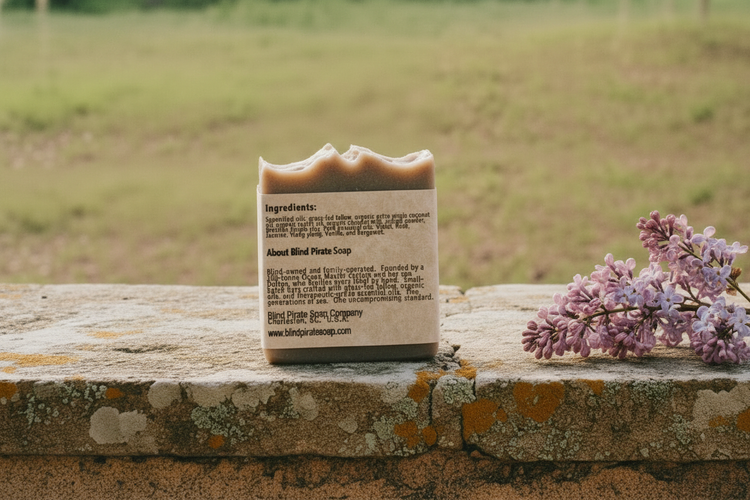
Rounded out with certified organic coconut and castor oils and rich coconut milk — the coconut milk is what turns the lather creamy. Cured a minimum of eight weeks into a hard, long-lasting bar.
The hands that made it
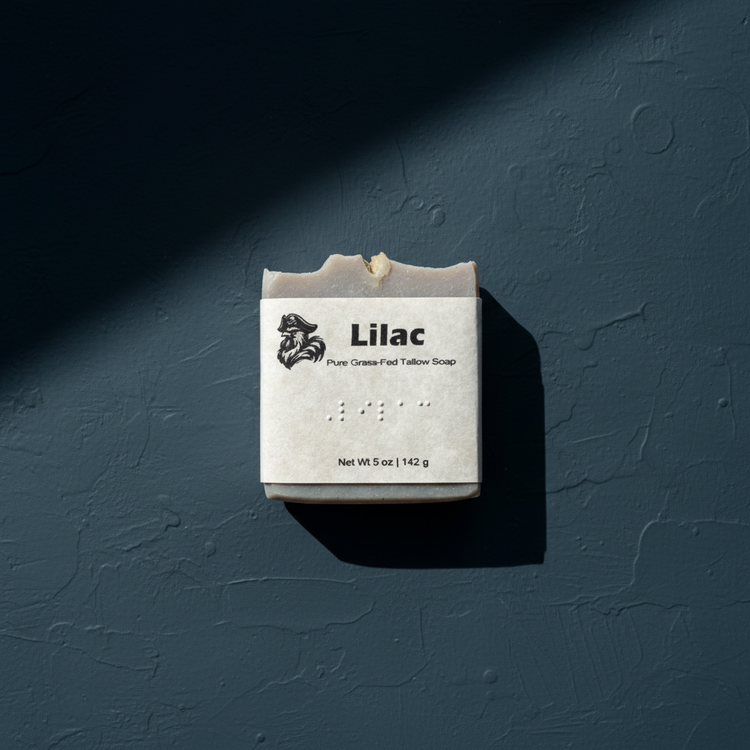
Every Captain's Bar is Braille-labeled by hand by our co-founder Dolton, who is blind, on a Perkins Brailler. Because if you can't read it independently, it isn't finished. A limited summer treat, built out of love — offered as Captain's Bars only. When these are gone, they're gone until September.
The wind is out there. Point yourself into it.
Ingredients
Scent Profile
Care Guide
Palm oil free?
Always
Vegan?
Description
Some soaps we make to sell. This one we made because someone we love was homesick for a smell.
A dear friend, far from home now, missed the lilacs of her girlhood — that particular powdery sweetness that outlives the porch it grew beside, the garden that's long gone to seed. Here in the Lowcountry we know that kind of survival. Walk the old plantation grounds at Botany Bay and you'll find stone walls standing with no house left to hold up, chimneys alone in a field, and still — something blooms there every spring, planted by hands two hundred years gone. Lilac is that flower. It doesn't ask permission to keep going.
So we went looking for the true scent of it — through a recipe that traces back to a small farm in France, and down every dead end most makers take, before we found the honest way to build it. When she finally smelled the finished bar, she said the only words we were waiting for: that's them.
What's in it
The scent. Lilac is one of the flowers that won't be captured — the blossom yields no oil, so a true lilac has to be built by hand, note by note. What sets ours apart is what sits at its heart. Most makers fake the powder with a synthetic; we reached instead for genuine violet, Viola odorata — one of the rarest and costliest oils there is, the cool, powdery, faintly old-fashioned note nearly every lilac scent misses. It distills, but barely, and almost no one uses the real thing because it simply isn't economical. We did. Over it, a lift of bergamot brightens the whole accord until it reads, unmistakably, as lilac in full bloom — the kind that grows wild against old stone with no one left to tend it. Rose and jasmine deepen the floral heart, ylang ylang rounds it, and vanilla settles underneath, warm and soft, the way an evening garden holds its scent long after the house beside it has fallen quiet. No synthetic fragrance, ever.
Indigo and purple clay. The color of the flower just before it opens. Indigo powder and purple clay are layered to give this bar its pale lilac-blue — no dye, nothing synthetic. What you see is what the earth gave us.
Why our tallow is different
Not all tallow is equal. Certified grass-fed means the animal spent at least 95% of its life on open pasture — sun, grass, and open land the way nature intended. Only 5% grain, ever. That standard produces tallow rich in conjugated linoleic acid and the fat-soluble vitamins A, D, E, and K — the bioavailable fats your skin recognizes as its own. We source it low-heat rendered, so every nutrient is preserved from pasture to bar. It costs us twice what standard tallow costs. Even certified organic tallow can come from grain-fed, shed-raised animals; certified grass-fed covers how that animal actually lived. We'll take our chances with the sun and grass.
Rounded out with certified organic coconut and castor oils and rich coconut milk — the coconut milk is what turns the lather creamy. Cured a minimum of eight weeks into a hard, long-lasting bar.
The hands that made it
Every Captain's Bar is Braille-labeled by hand by our co-founder Dolton, who is blind, on a Perkins Brailler. Because if you can't read it independently, it isn't finished. A limited summer treat, built out of love — offered as Captain's Bars only. When these are gone, they're gone until September.
The wind is out there. Point yourself into it.
Ingredients
Scent Profile
Care Guide
Palm oil free?
Always
Vegan?